

Preparing your child for their first dental visit means helping them feel comfortable with what to expect, rather than letting the appointment feel like a surprise. Simple language, some pretend play at home, and a calm attitude from you make the biggest difference. Dentists recommend scheduling the first visit within six months of the first tooth appearing, or by the child’s first birthday at the latest. Most first visits are short and focused on comfort, not treatment. Cosmo Dental Care in Kondapur, Hyderabad, offers a calm, child-friendly first visit designed to help your child feel safe from the very start.
You are not sure when to start, and honestly, the idea of taking your toddler to the dentist feels a little intimidating. Will they cry? Will they refuse to open their mouth? Will one bad experience make them scared of dentists for years? These worries are completely normal, and the good news is that a little preparation goes a long way toward making the first visit calm instead of chaotic.
This guide walks you through when to go, how to prepare at home, what actually happens in the room, and how to handle things if your child gets upset along the way.
When should you take your child for their first dental visit?
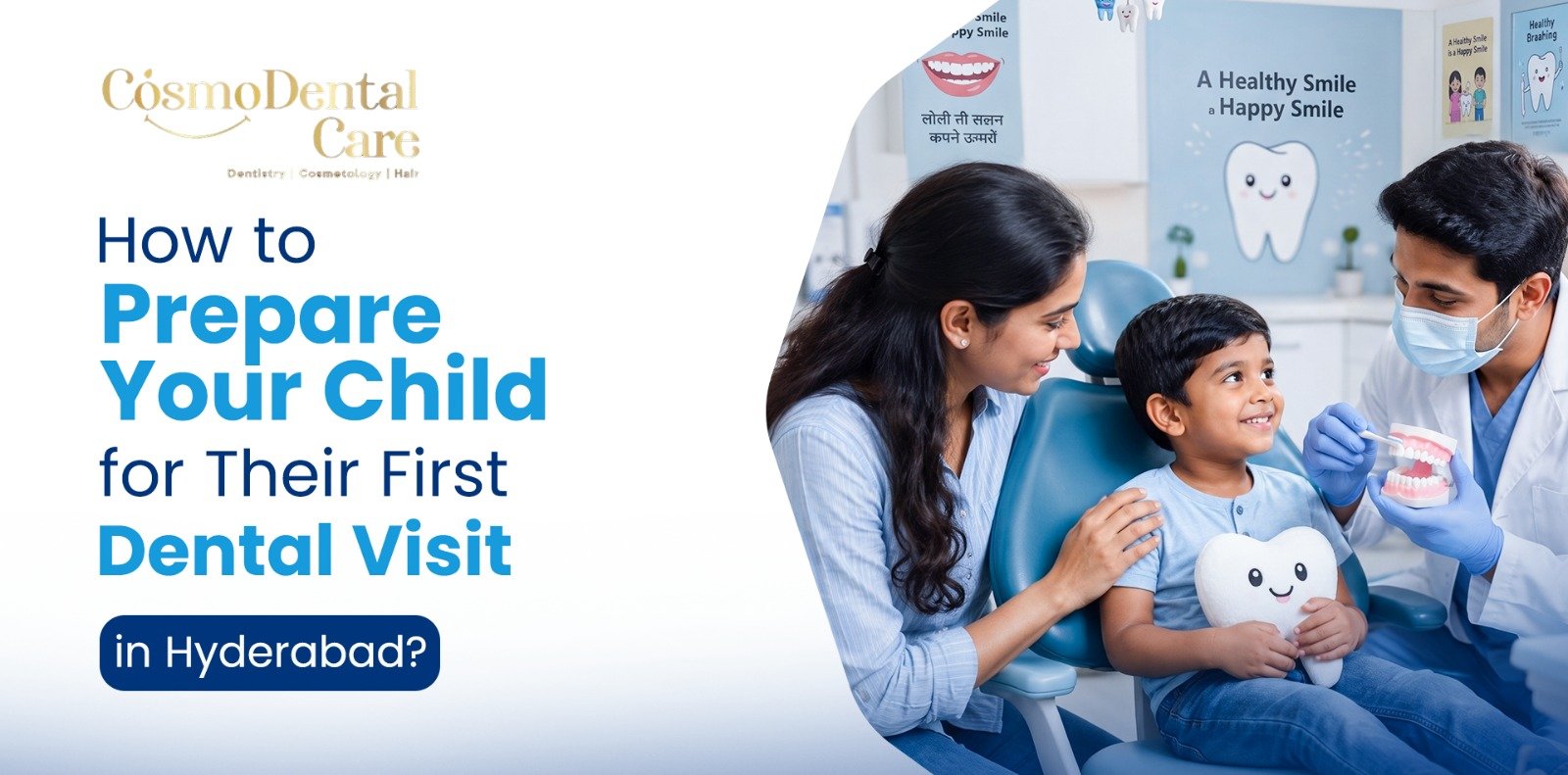
The American Academy of Pediatric Dentistry recommends scheduling the first visit within six months of the first tooth erupting, or by the child’s first birthday, whichever comes first. This may feel early to many parents, especially when a baby only has a few teeth, but starting early is exactly the point.
An early first visit is not about finding problems. It is about building a relationship with a dentist your child sees regularly, so future visits feel familiar rather than new and scary each time. It also gives your dentist a chance to check on early habits, like bottle feeding at night or thumb-sucking, before they become harder to change. Waiting until a child is three or four, or until something hurts, often means the first visit happens at the same time as their first uncomfortable experience, which makes it much harder for a child to feel at ease.
After this first visit, your dentist will usually suggest a regular checkup schedule going forward, adjusted to your child’s individual needs and any risk factors they noticed. Keeping up with these follow-up visits matters just as much as the first one, since consistent checkups are what actually build long-term comfort and catch small issues early.
How can you prepare your child at home before the appointment?
Preparation usually works best when it feels like play instead of a lesson. A few days before the visit, try a simple round of pretend dentist at home. Sit your child in a chair, count their teeth with a soft toothbrush, and let them do the same to a stuffed toy or to you. This turns an unfamiliar situation into something they have already practiced.
Reading a picture book or watching a short show about visiting the dentist works well too, since children process new experiences better through stories than through explanations. Keep your own tone light and matter-of-fact. Children pick up on a parent’s anxiety quickly, so if you talk about the visit calmly, your child is more likely to feel calm about it as well.
Avoid over-explaining or building it up too much in either direction. You do not need to promise a reward for good behavior, and you do not need to warn them repeatedly to be brave. A short, simple mention that you are visiting a dentist who checks and cleans teeth is usually enough.
On the day itself, it helps to carry a few small things along. Bring any previous medical records if your child has specific health conditions, a list of questions you want to ask, your child’s favorite comfort toy, and a small snack for after the appointment. Feeding your child a light meal before you leave, rather than arriving hungry, also helps keep them more settled while you wait.
You do not need to do anything special with brushing right before the visit. A normal brushing session at home that morning is enough, and there is no need to scrub extra hard or worry that the dentist will judge how clean your child’s teeth look. The visit is meant to assess where things stand and offer guidance, not to test how well you brushed that morning.
What actually happens during a child’s first dental visit?
Knowing what actually happens helps take away a lot of the guesswork for both you and your child. For toddlers and very young children, dentists often use a position called knee-to-knee, where you sit facing the dentist with your knees touching theirs, and your child lies back with their head resting in the dentist’s lap. This keeps your child close to you the whole time while giving the dentist a clear, gentle view of their mouth.
The exam itself is usually brief. The dentist counts and checks the teeth, looks at the gums and bite, and may gently clean visible surfaces. For very young children, there is often no instrument beyond a small mirror and a soft brush. Most first visits do not involve treatment of any kind, since the goal is comfort and familiarity, not procedures.
The dentist will also talk to you directly about a few practical topics. This usually includes bottle feeding at night, since prolonged contact with sugar overnight can affect young teeth, along with thumb-sucking or pacifier habits and when it is worth gently discouraging them. Frequent sweets and snacking between meals often come up too, along with basic brushing guidance, including how much toothpaste to use at different ages. None of these conversations are meant to alarm you. They are meant to catch small, easy-to-adjust habits early, before they turn into bigger problems. This is also a good moment to ask your own questions, such as how to handle a loose baby tooth, when to expect the next tooth, or what a normal amount of drooling or teething discomfort looks like.
For young children, parents usually stay in the room the whole time, often as part of the knee-to-knee position itself, so your child can see and feel you close by throughout the exam. For older children who feel confident, some dentists may ask you to wait just outside, though this is entirely up to your comfort and your child’s, and a good pediatric dentist will always follow your lead on this.
If the dentist does spot a small cavity or an early sign of decay at a first visit, try not to panic. This is common, especially if it is your child’s first checkup, and pediatric dentists are experienced at treating baby teeth gently, often with simple, minimally invasive options depending on how early it is caught. Your dentist will walk you through what they found, why it happened, and what the next steps look like, so you leave with a clear plan rather than just a diagnosis.
How can you help your child if they get anxious or cry during the visit?
Even with the best preparation, some children cry or resist at their first visit, and this is far more common than parents expect. If it happens, stay calm and avoid reacting with frustration or over-comforting, since both can unintentionally signal to your child that something is wrong.
A steady, reassuring tone works better than trying to stop the crying immediately. Let the dentist guide the pace. Pediatric dentists are trained to work with anxious children and often pause, distract, or slow down rather than push through resistance. If your child needs a short break to sit up and look around, that is a normal part of the process, not a failure.
Bringing a familiar comfort item, like a small stuffed toy, can help too. Holding something familiar gives a child a sense of control in an unfamiliar room. Most importantly, do not treat crying as a bad outcome. A child who cries at their first visit but leaves safely and without pain has still had a successful first experience, even if it did not feel that way in the moment. If your child was especially unsettled, ask the dentist about a short follow-up visit rather than waiting a full six months, since a second gentle exposure often goes far more smoothly than the first.
What should you tell your child, and what should you avoid saying?
The words you use before and during the visit matter more than most parents realize. Keep your language simple and neutral. You can tell your child the dentist will count their teeth and make sure they are healthy and strong.
Avoid words like hurt, pain, shot, or drill, even when you mean to reassure your child that these will not happen. Young children often focus on the specific word rather than the reassurance around it, so saying “it won’t hurt” can plant the idea of hurting in their mind more than it comforts them. Instead of “don’t worry, it won’t hurt,” try “the dentist is going to look at your teeth and count them.”
After the visit, talk about what went well rather than dwelling on any tears or resistance. Mentioning that nothing hurt, that the dentist was friendly, or that they got to sit in a special chair helps your child build a positive memory to carry into the next visit.
What should you tell your dentist before your child’s first dental visit?
A quick conversation with your dentist’s team before the appointment helps them plan for your child specifically, rather than treating every visit the same way. Mention if your child has had a difficult experience at a medical appointment before, has sensory sensitivities, or tends to get overwhelmed in new places. This lets the team adjust their pace and approach from the very start.
It also helps to mention your child’s current routine. A child who is unwell, overtired, or overdue for a nap is far more likely to struggle, so flagging this ahead of time gives the front desk a chance to suggest a better day or time if needed. Many parents find that morning appointments work well because young children are often more rested and cooperative earlier in the day, though this varies from child to child, so pay attention to what your own child’s routine actually looks like.
Finally, share anything specific you have noticed at home, such as a loose tooth, a habit like thumb-sucking, or a change in eating that concerns you. Small details like these help your dentist focus the visit on what actually matters for your child, rather than relying on a generic checklist.
What are the benefits and limitations of preparing your child before the first visit?
Helps reduce fear of the unknown. Children who have some idea of what to expect, through pretend play or a simple book, are often calmer than children walking into a completely unfamiliar situation.
Builds trust with the dentist early. A calm first experience helps your child see the dentist as a familiar, safe part of their routine rather than something to dread.
Makes future appointments easier. Preparation habits, like practicing at home and using neutral language, tend to carry over and make each following visit a little smoother than the last.
Cannot guarantee your child will not cry. Even well-prepared children sometimes get upset on the day, since young children respond to new environments in ways that are hard to fully predict.
Every child reacts differently. What works well for one child, like a favorite toy or a specific book, may do little for another, so preparation often takes some trial and error.
Some children need more than one visit to feel comfortable. For a small number of children, especially those with sensory sensitivities or past negative experiences, it can take a couple of short visits before they feel at ease, and that is a normal part of the process, not a sign that something went wrong.
Frequently Asked Questions
Q: What age should my child have their first dental checkup? A: Dentists recommend a first visit within six months of the first tooth coming in, or by your child’s first birthday at the latest, following the age-one guideline from the American Academy of Pediatric Dentistry. Starting this early is less about finding problems and more about building familiarity with the dentist and catching habits like bottle feeding or thumb-sucking early on.
Q: Will my child cry at their first dental visit, and is that normal? A: Yes, it is very common, especially for toddlers, and it does not mean the visit went badly. Pediatric dentists are used to working with children who cry or resist, and they usually pause or slow down rather than push through it. A calm, reassuring approach from you, along with a familiar comfort item, often helps more than trying to stop the crying immediately.
Q: Do I need to prepare my child’s diet before the visit? A: You do not need to change your child’s diet specifically for the appointment, though avoiding a very sugary snack right before is a reasonable precaution. What matters more is being ready to talk to the dentist honestly about your child’s usual eating and feeding habits, since this helps them give you relevant, personalized guidance rather than generic advice.
Q: What if my child refuses to open their mouth at the dentist? A: This happens fairly often, and a good pediatric dentist has several gentle ways to work through it, including letting your child look at the tools first, counting teeth playfully, or trying again after a short pause. If your child truly cannot settle that day, the dentist may suggest trying again at another visit rather than forcing the exam, since building comfort matters more than completing every step on the first try.
Q: How long does a first dental visit usually take? A: Most first visits are fairly brief, since the goal is a short, gentle introduction rather than a lengthy procedure, and your dentist can give you a better sense of timing based on your child’s age and comfort level. This includes time for the dentist to talk with you about brushing, feeding, and any habits worth watching, alongside a quick look at your child’s teeth and gums.
Where can you schedule your child’s first dental visit in Kondapur?
If you are looking for a first dental visit that feels calm rather than stressful, working with a team experienced in pediatric dentistry makes a real difference. Cosmo Dental Care in Kondapur, Hyderabad, offers gentle, friendly pediatric dental care designed around your child’s comfort, with a team that takes time to explain things simply to both you and your child. Pairing an early first visit with guidance on oral prophylaxis and scaling as your child grows helps build healthy habits that last well beyond that first appointment