
Teeth whitening results fade because whitening does not stop new stains from forming. After treatment, your teeth stay exposed to tea, coffee, tobacco, dark foods, plaque, and other sources of discoloration. How quickly the shade changes depends on your habits, oral hygiene, stain type, and whitening method. Regular dental care and sensible daily habits can help maintain a brighter shade, but whitening is not permanent. Cosmo Dental Care in Kondapur, Hyderabad, helps patients understand their stain type, choose a suitable whitening approach, and plan ongoing care based on their individual needs.
You whitened your teeth a few weeks ago, and the bright, camera-ready smile you walked out with already looks a little duller. You are left wondering if something went wrong, or if this is just normal. Most people feel the same way, and the honest answer is that some change over time is expected. What varies a lot is how fast it happens and how much control you actually have over it.
This guide breaks down why whitening results change over time, what is worth paying attention to right after treatment, and what habits genuinely help your results last.
Why do teeth whitening results fade over time?
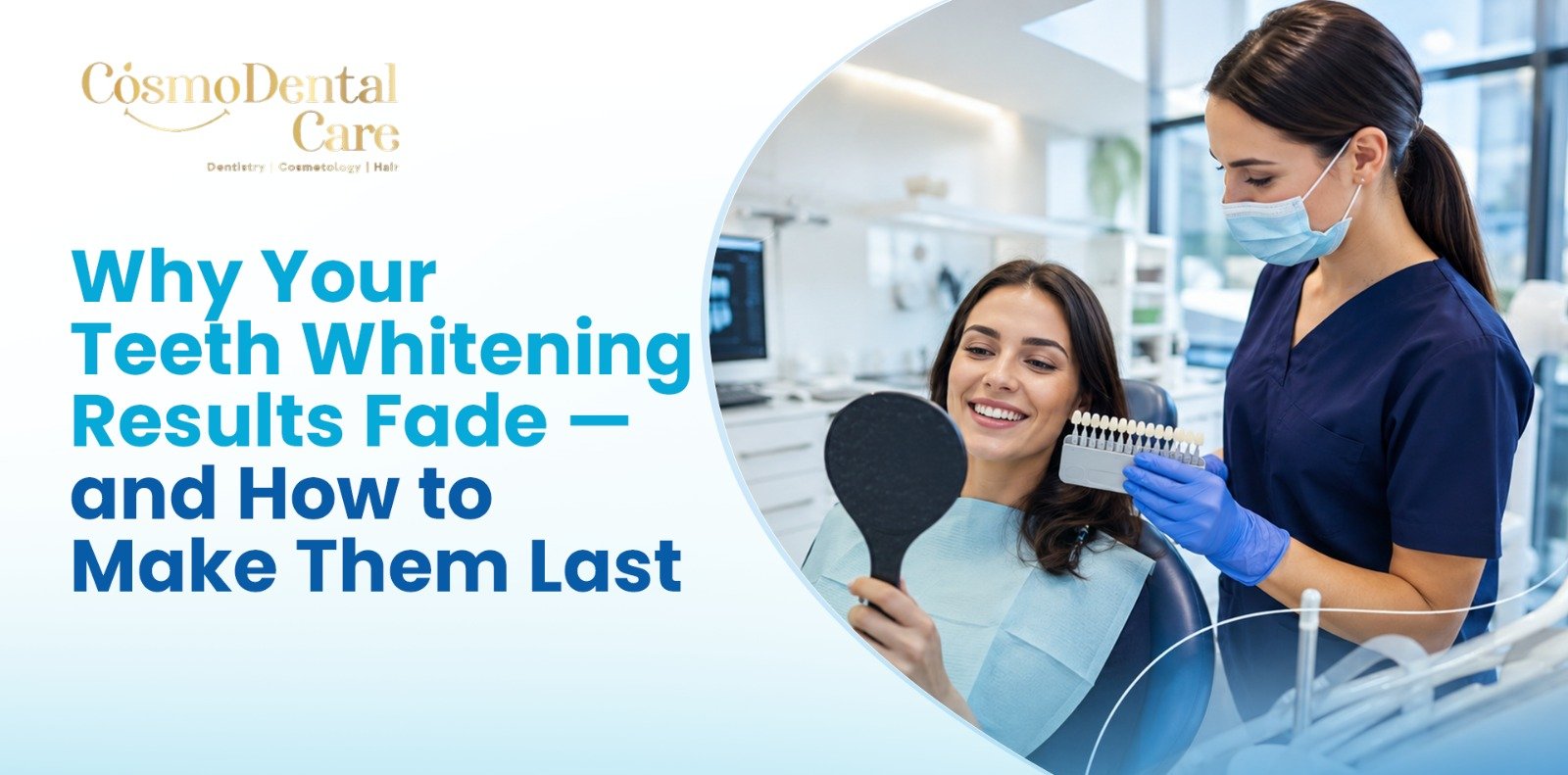
Whitening treatments use a bleaching agent to break down stain compounds that have built up on and within your tooth enamel over time. This is why teeth look noticeably brighter right after treatment.
The problem is that whitening does not permanently change your enamel or stop new staining from happening again. Teeth can develop new discoloration as pigments from foods, drinks, and tobacco collect on or interact with the tooth surface over time. Every cup of tea, glass of wine, or bite of a tomato-based dish reintroduces staining compounds, and gradually, they build back up. This is a normal part of how teeth behave, not a sign that your treatment failed or that the dentist did something wrong.
How quickly this happens is not the same for everyone. It depends on the type of stain you started with, how strong your original whitening treatment was, and how consistently you keep up with daily oral care afterward. Some people notice a change within weeks, and others go much longer before they feel the need for a touch-up. A dentist who has seen your teeth before and after treatment is in the best position to tell you what to expect in your specific case, rather than relying on a general timeline that may not apply to you.
Is it normal for whitening to look duller after a few days, or is that different from fading?
This is one of the most misunderstood parts of the whitening process. Right after whitening, teeth may look brighter than they do once the shade settles. This early change does not necessarily mean the treatment has faded. It is often part of how the tooth surface normally responds and stabilizes in the days following treatment.
This settling is not the same thing as new staining. It catches a lot of patients off guard because they compare their teeth on the first day to how they look a few days later and assume something is going wrong. If you feel unsure about how your shade is settling, ask your dentist rather than repeating a whitening treatment right away. Whitening again too soon, before your teeth have had a chance to settle, adds unnecessary sensitivity and enamel stress without a clear benefit.
Real fading, the kind caused by new staining building up, tends to happen gradually over weeks and months of normal eating, drinking, and daily habits, not in the days immediately following treatment. If your teeth looked their brightest right after the appointment and settled slightly afterward, that is expected. If your teeth look noticeably duller after weeks of normal use, that points to new staining rather than the initial settling period.
What foods, drinks, and habits make whitening fade faster?
Certain foods and drinks contain pigments called chromogens, which are especially good at attaching to the tooth surface. Coffee, black tea, red wine, cola, and dark berries are common culprits in most parts of the world. In India, chai, turmeric-based dishes, and tobacco products like paan or gutka are just as significant, and they rarely appear in whitening advice written for other markets.
Smoking and chewing tobacco are some of the fastest ways to bring back discoloration, since tobacco stains sit both on the surface of the tooth and within it. Poor oral hygiene speeds this up too, since plaque buildup gives new pigments an easier surface to stick to and settle on.
Acidic foods and drinks do not stain teeth directly, but they can soften the tooth surface temporarily, which may make it easier for pigments to settle in right after you eat or drink something acidic. Waiting a short while before brushing after acidic food, rather than brushing immediately, is a small habit that protects your teeth during this softer window.
Your natural stain type also plays a role. Surface stains from food, drink, and tobacco tend to respond well to whitening and touch-ups. Stains that sit deeper within the tooth, sometimes linked to age, certain medications, or old injuries, behave differently and may not lighten as easily or as predictably with standard whitening.
Does the whitening method affect how long results hold up?
There is no single fixed timeline for how long whitening lasts, since it depends heavily on the method used, your original stain type, and your personal habits afterward. Rather than promising a set number of months, a dentist assesses how your teeth respond to treatment and recommends a maintenance plan suited to your individual result.
Professional in-office whitening and dentist-supervised take-home trays use controlled bleaching agents under professional guidance, which allows your dentist to adjust strength and timing to your specific teeth and sensitivity level. Over-the-counter kits are more generalized, since they are not adjusted to your individual stain type or sensitivity, and a dentist is not involved in guiding the process.
Whitening toothpaste sits in a different category altogether. It works mainly through mild abrasion to lift surface stains, rather than through the bleaching process used in professional treatments. It can help maintain your shade between treatments, but it is not designed to restore significant brightness on its own.
Here is how the main options compare side by side.
| Feature | Professional in-office whitening | Take-home tray system | Whitening toothpaste |
| Mechanism | Bleaching gel applied and monitored by a dentist | Custom tray with dentist-guided bleaching gel | Mild abrasion, lifts surface stains only |
| Personalization | Adjusted to your teeth and sensitivity in the chair | Guided by your dentist, used at home | Not personalized |
| Best suited for | Patients who want a dentist managing the process directly | Patients who prefer treating at home under guidance | Maintaining shade between treatments |
| Professional oversight | Direct, in the dental chair | Indirect, with dentist guidance | None |
This comparison shows why in-office and take-home tray whitening are usually recommended as the main treatments, while whitening toothpaste plays a supporting role rather than a stand-alone fix.
How can you make your whitening results last longer?
Follow your dentist’s advice about foods, drinks, and tobacco after treatment, especially during the early period right after whitening, since this is when many dentists recommend being a little more careful with staining foods and drinks.
Beyond that early period, a few consistent habits protect your results for the months ahead. Rinse your mouth with water after drinking coffee, tea, or wine if you cannot brush right away. Use a straw for dark, staining drinks to reduce contact with your front teeth. Brush twice a day and floss daily, since this prevents plaque from giving new stains an easier surface to grip. Ask your dentist about a sensible touch-up schedule, since a small maintenance session is usually much simpler than starting over from a fully faded shade.
Your overall oral health matters here too. Gum disease and untreated cavities can change how your teeth look and feel, separately from staining, so keeping up with routine checkups protects both your smile’s brightness and your general dental health at the same time.
When should you ask a dentist about teeth whitening?
Most changes in shade over time are simply new surface staining, and a touch-up treatment or better daily habits usually addresses it. But a few signs are worth a dental conversation rather than more whitening at home.
If your teeth feel increasingly sensitive to hot or cold, or if you notice uneven color between individual teeth rather than a general dulling across your whole smile, these are worth checking with your dentist before you whiten again. Whitening does not change the color of existing fillings, crowns, or veneers, so if one tooth looks different from the rest in a way that does not match normal staining, more whitening at home is unlikely to fix it and could add unnecessary sensitivity. A dentist can also confirm whether your gums and enamel are in good enough condition for another round of whitening in the first place, which matters more than guessing based on how long it has been since your last treatment.
What are the benefits and limitations of teeth whitening?
Can produce a noticeable change. Professional whitening can produce a noticeable change in tooth shade for suitable patients, which makes it one of the more popular cosmetic dental treatments available.
Non-invasive. Whitening does not require any cutting or reshaping of the tooth, unlike veneers or crowns, so it carries less risk to your natural tooth structure.
Not permanent. Whitening fades as new stains build up over time, so it is an ongoing process rather than a one-time fix, and this is worth planning for financially and in terms of your daily habits.
Sensitivity risk. Some people experience temporary sensitivity to hot or cold after treatment, and this is worth discussing with your dentist beforehand if you already have sensitive teeth.
Does not work on all stains. Whitening lifts surface stains and some stains within the tooth, but it will not change the color of crowns, veneers, or fillings, and certain deep or medication-related stains respond less predictably.
Professional assessment can improve treatment planning. A dentist can check your teeth, gums, restorations, stain type, and sensitivity before recommending a suitable whitening method, which gives you a clearer, more personal picture than a generic store-bought kit.
Frequently Asked Questions
Q: Why did my teeth get whiter after treatment but look less bright a few days later? A: Part of what looks like fast fading in the first few days is often the shade settling as your teeth respond and stabilize after treatment, which is a normal part of the process rather than true fading. Real fading from new staining tends to happen more gradually, over weeks and months, as your teeth are exposed to food, drinks, and daily habits again.
Q: Does drinking coffee through a straw really help? A: Yes, using a straw reduces how much contact staining drinks have with the front surfaces of your teeth, which can slow down how quickly new pigments build up. It will not eliminate staining completely, since some contact still happens, but combined with rinsing after drinks and regular brushing, it is a simple habit that supports longer-lasting results.
Q: Can whitening toothpaste bring back my results on its own? A: Whitening toothpaste works mainly through gentle abrasion to remove surface stains, not through the bleaching process used in professional treatments. It can help maintain brightness between whitening sessions, but it is not designed to restore a significantly faded shade by itself, so think of it as maintenance rather than a fix.
Q: Is it bad to whiten my teeth too often? A: Whitening too frequently, especially without dental guidance, can increase the risk of tooth sensitivity and put unnecessary stress on your teeth over time. This is especially worth avoiding in the days right after a treatment, while your teeth are still settling into their new shade. Following the schedule your dentist recommends, rather than repeating treatments impulsively whenever your teeth look slightly dull, protects your teeth while still keeping your smile bright.
Q: Why do my teeth look yellow again even though I brush every day? A: Brushing removes plaque and surface debris, but it does not stop new pigments from settling onto your teeth over time. Daily brushing is still essential for oral health and helps slow down staining, but it works alongside, not instead of, habits like limiting staining drinks and asking your dentist about a sensible touch-up schedule when your shade starts to change.
When should you ask a dentist about teeth whitening options?
If you want a brighter smile that holds up well over time, working with a dental team that plans your treatment around your specific stain type and habits matters more than the whitening product itself. Cosmo Dental Care in Kondapur, Hyderabad, assesses your teeth, gums, and stain type before recommending a whitening approach, so you get a realistic idea of what to expect and what ongoing care looks like for you. Pairing whitening with regular oral prophylaxis and scaling also helps keep new staining from building up as quickly, since plaque removal supports the results of any whitening treatment you choose.